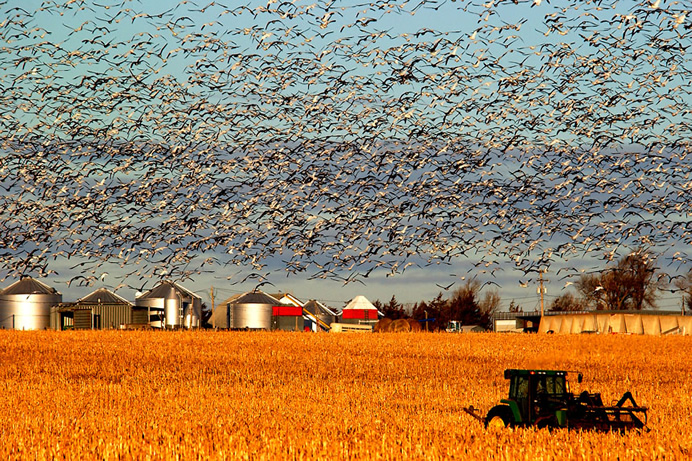
BIRDS LOVE THIS PART OF NEBRASKA! YOU WILL TOO!
Out beyond the great Midwestern cities, the land opens up and the pavement gives way to fields and
streams, to prairie, rills and endless sky. Right in the center of North America’s central flyway, millions
of birds of all shapes, sizes and species pass through this area every year. If you know where to look —
and that’s the key — you can see an uncommon variety, and, if you’re dedicated, knowledgeable and lucky, you can often make unusual and interesting sightings.
We live here. We put together this site to help birders discover an area rich not only in birds, but in history and culture, with its own brand of inspiring scenery. As you travel each trail, we’ve included our own recommendations of some of the places you might like to stop, including good local restaurants (we eat there ourselves), places to stay and points of interest.
Each loop is a different terrain and habitat and encompasses a number of sites along the highway or secondary roads. An interactive map for each loop describes the sites, common birds and points of interest in the area. Just click on a link below to get started.
The Adventures
Rainwater Basin Adventure
The rainwater basins of Central Nebraska provide spring migration habitat for about 6 million snow geese and a million Canada geese as well as 5-7 million ducks, and well over a million Sandhill cranes. Nearly half the mallard population rests in the rainwater basins before continuing north to nesting grounds. Spring offers an unparalleled birding experience.
Loess Canyon Adventure
Rivers, rains and winds dissected and eroded the high tablelands south of the Platte River in central Nebraska to carve the rugged, scenic Loess Canyons. The prevailing northwest winds belw in silt (loess) and deposited the mineral rich dust across the deep canyons and uplands.The loess mantle nourishes thick growths of prairie grasses and a variety of wild flowers. Here, in April, May and early June, lucky birders can see prairie chickens “dance” on their traditional breeding grounds.
Sandsage Prairie Adventure
The Republican River basin and floodplain offer a mixed and rich habitat for wildlife, and vast tracts of prairie wilderness draw birds that soar as well as many other animal species. On an immense, virtually treeless plain, open water and vegetation attract many species beyond shore birds, especially during migration. On this loop you’ll drive along the scenic Republican River to McCook and visit Red Willow Reservoir, Swanson Reservoir and SRA, and Enders Reservoir among other interesting habitat.
Medicine Creek Adventure
A habitat mix of towering cottonwoods, brushy seed and fruit bearing perennials, moist bottomlands and moving water draws a mix of wildlife. Water birds may be spotted along the river and many species of woodland songbirds nest in the deciduous, ancient trees along the Republican. A careful birder can make a big dent in their bird list in many of the scenic spots along this loop.
This Site Made Possible By:
Paid in part by a grant from the Nebraska Division of Travel & Tourism.
www.visitnebraska.com
GROW Nebraska
www.growneb.com
South Platte Chambers of Commerce
www.spuccne.com
Nebraska Rural Living
www.nebraskaruralliving.com
Nebraska Environmental Trust
www.environmentaltrust.org
Thanks also to the following counties and communities for their support:
- Chase
- Dundy
- Frontier
- Furnas
- Kearney
- Phelps
- Red Willow
The Greater Priairie Chicken is a type of grouse, common to open grassland such as we have here. They are particularly known for their mating dance in which males display together in a communal lek, raising ear–like feathers above their heads and inflating orange sacs on the sides of their throats. The dance is a kind of stutter–step accompanied by a deep hooting moan. It’s worth seeing in person! Greater Prairie Chickens can been seen in Nebraska along the